



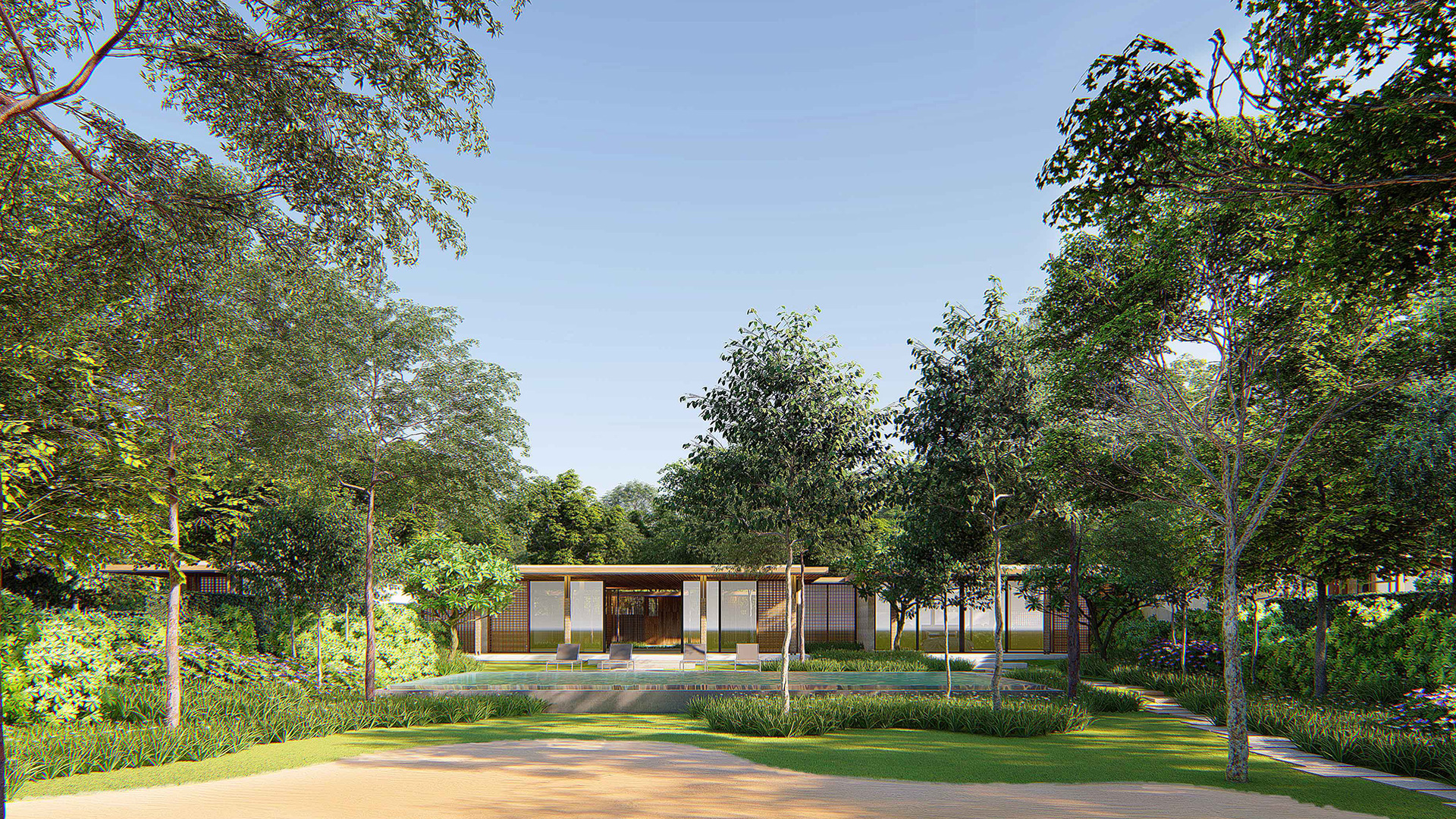
Luxury Island Resort
Northern Philippines
The guest experience unfolds as a journey through the forest.
Pavilion-style estates rest gently beneath the canopy,
each nestled within natural clearings and linked
by shaded walkways that encourage exploration.
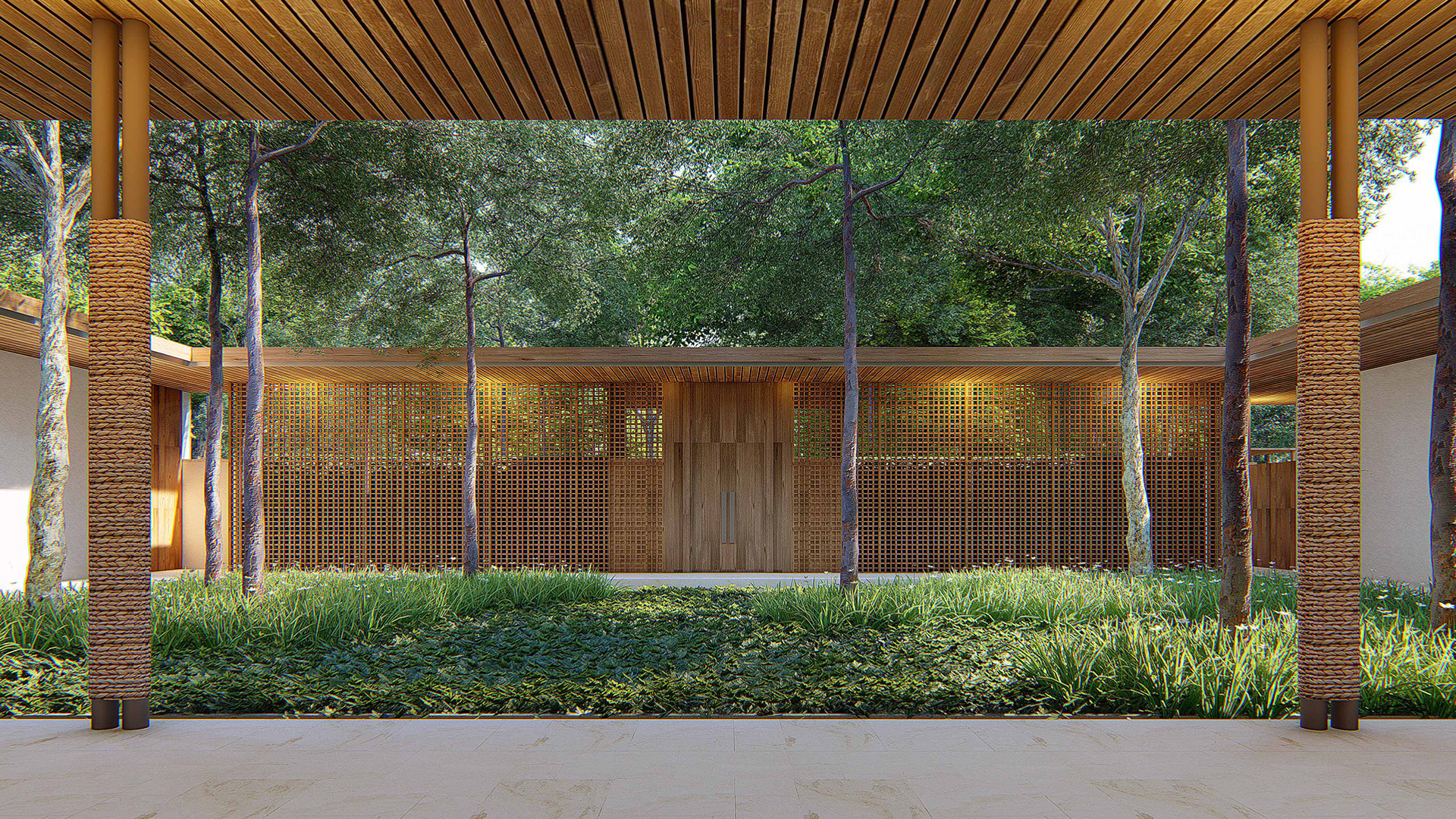
This exploration concept continues as guests enter the villa, not through a hall, but directly into a garden, a private space where trees are preserved, and the building is structured around them. Woven rattan screens and other natural materials evoke the Philippines’ long tradition of craft, grounding the design in its local context.
The minimalist architecture is held at a single storey to sit beneath the canopy, while above-ground construction minimises disturbance to the site. The pavilion-style living creates a sequence of indoor rooms and covered walkways that lead guests through nature as they move around their villa.
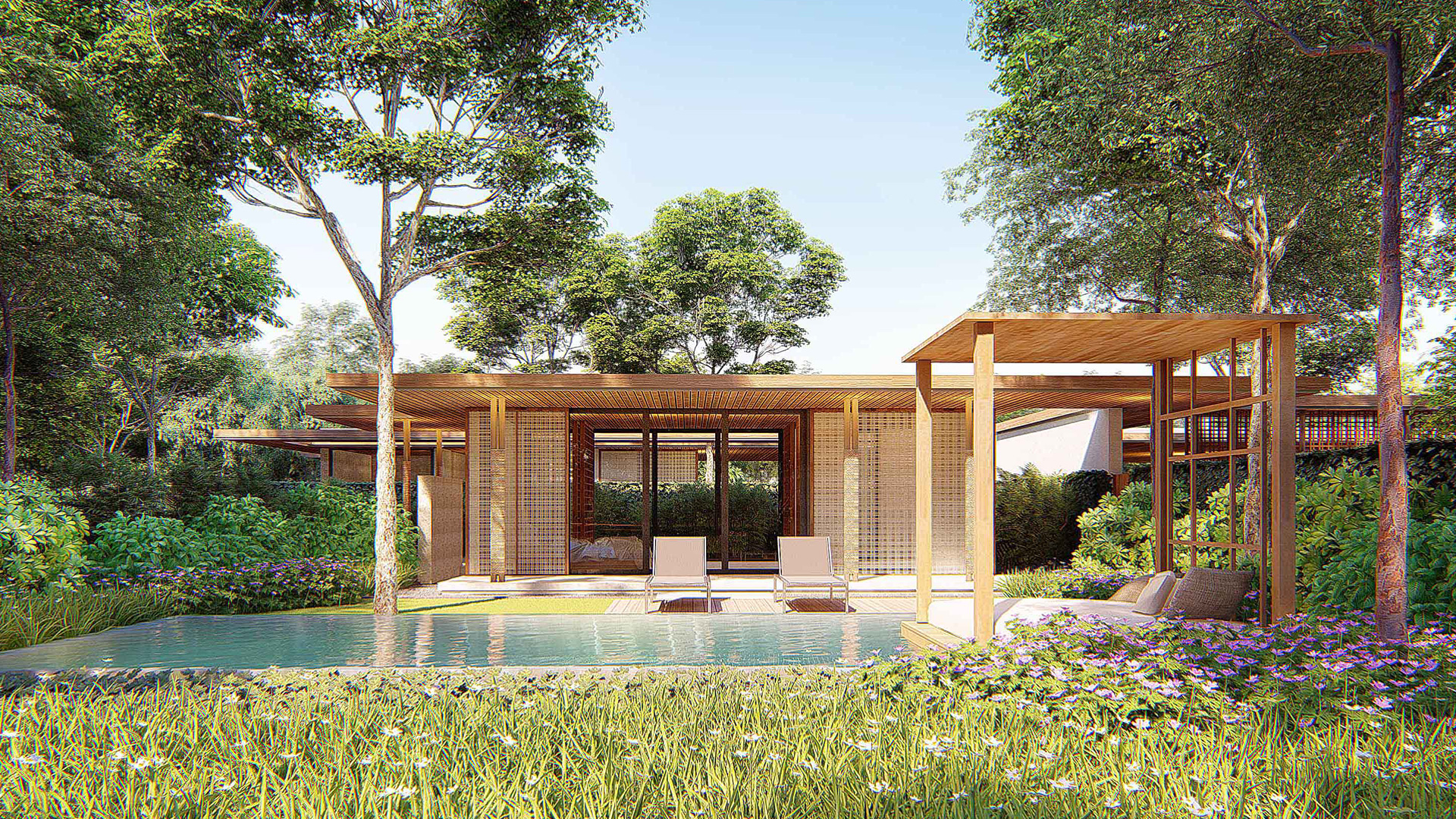
Indoor–outdoor living becomes tangible: glazing opens and tucks behind rattan panels, inviting airflow, while the architecture maintains a serene minimalism, ensuring the island’s beauty always stands at the forefront.
“We wanted to create a dwelling experience that equates to a walk in the forest. When you walk in the forest, you take the path in between the trees.”
To maintain harmony with nature, plots of up to an acre allow for single-storey architecture, giving nature room to breathe. Villas are planned around existing trees, with trunks over eight inches retained and many smaller trees transplanted.
For the beach residence, the villa is set back to preserve the shoreline. Screens and operable layers provide natural ventilation, comfort, and privacy. The architectural language remains minimal, allowing the island’s character to lead.
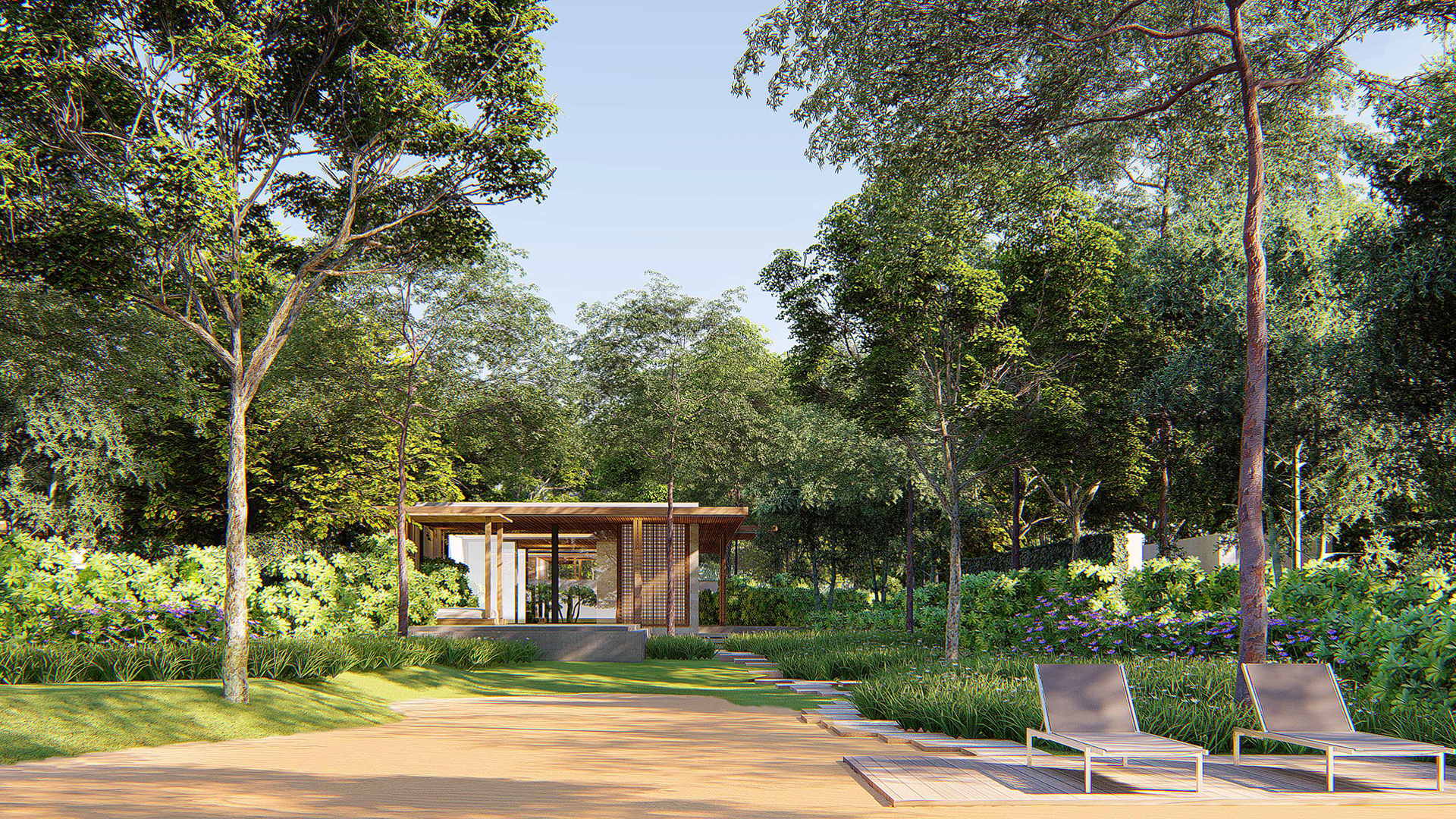
Developed by BLINK’s architectural team under the direction of Pietro Campanella, this concept was envisioned as a landscape-first private island resort, shaped by the preservation of mature trees and the realities of a tropical climate.
Planned as a series of ground-floor pavilions connected by covered walkways, the concept creates a lived experience of nature rather than simply observing it. Though unbuilt, it endures as a reminder that the most powerful hospitality architecture is often the least intrusive.