



Designing in Dialogue with the Land: BLINK’s Vision for Bodrum
An unbuilt masterpiece in Turkey’s Aegean Riviera, the Bodrum project reveals the quiet power of architecture that listens.
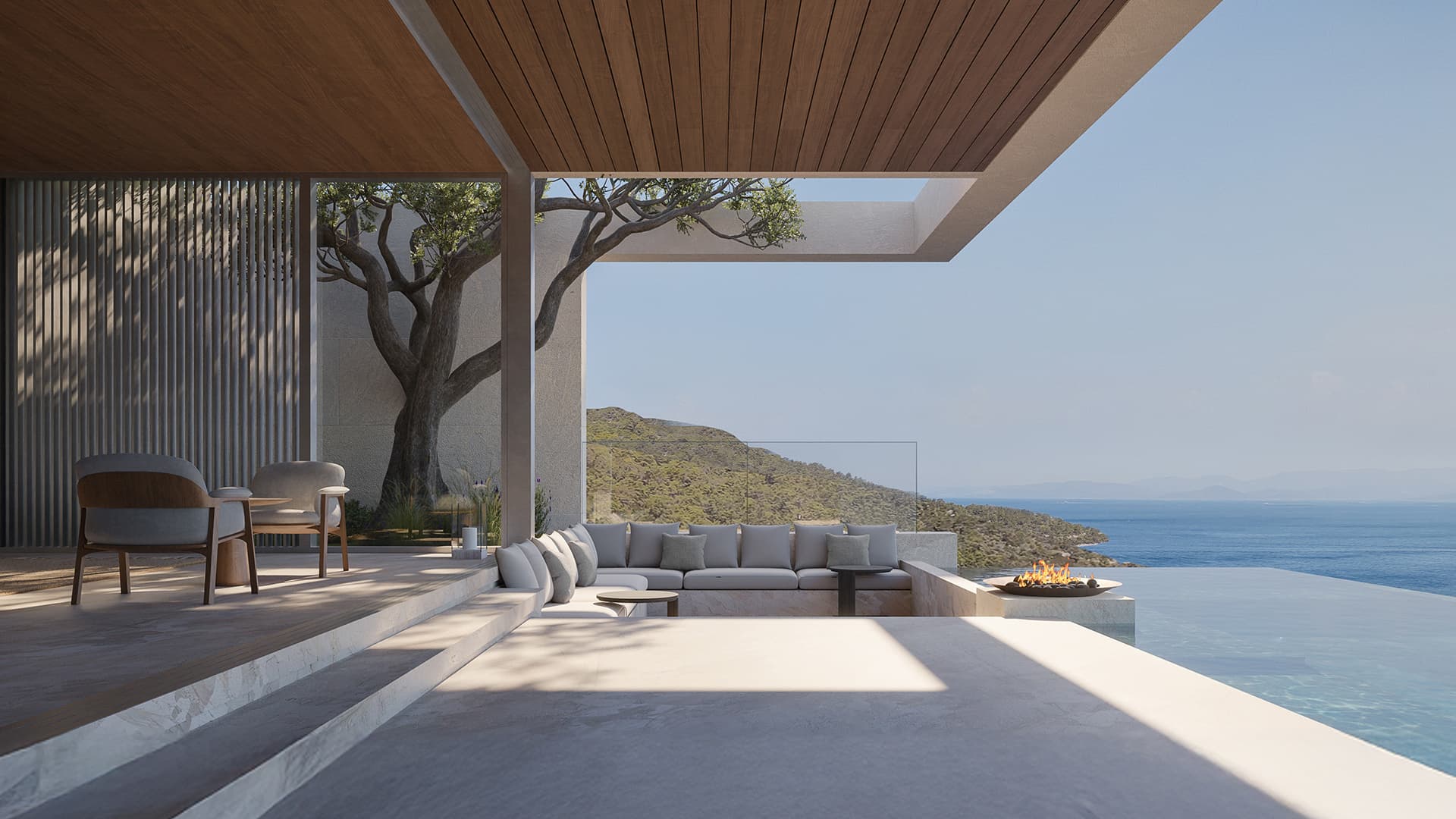
Nestled in a pine-draped valley along the Bodrum coastline, BLINK’s residential resort concept was more than an architectural vision; it followed a philosophy of restraint, rooted in place and purpose.
With Clint Nagata and Associate Director Iain Smales leading the design, the masterplan reflects BLINK’s commitment to clarity, sensitivity to context, and a growing presence in Europe.
“Every site is a conversation,” says Clint. “Our job is to listen, not impose.”
From Forest to Sea: Designing with Topography
The Bodrum site was unusually complex: densely forested, relatively flat, and bound by a client brief that asked for over 100 villas with minimal disruption to the landscape.
“There were over a thousand trees,” Clint recalls. “And the directive was clear: preserve everything you can.”
The masterplan became a puzzle of precision. Rather than dominate the terrain, the architecture was threaded through it, with villas nestled between existing trees, pathways meandering through shaded courtyards, and views gently coaxed open to the coastline beyond. A tiered approach offered varied typologies. Seafront ‘Estates’ gave way to Lake Villas framed by man-made lagoons, while Hillside Forest Villas offered elevation and seclusion.
“It was all about creating choice — and views — without carving up the land,” says Iain.
A Refined Vernacular
A key ambition was to design something that felt unmistakably Turkish, but without slipping into pastiche.
“We wanted the architecture to feel local, but contemporary,” explains Iain. “It needed to evolve the vernacular, not mimic it.”
Flat roofs, rough stone, and tactile plaster connected the villas to local building traditions. At the same time, BLINK’s design opened up the language, providing wider apertures, greater connection to light and landscape, and a material palette rooted in texture rather than gloss. Increasingly, we find that true luxury lives in the quiet details: proportion, privacy, and connection to place.
“We’re trying to redefine what luxury means,” says Clint. “It’s not about opulence anymore — it’s about privacy, space, and calm. In this case, the forest was the luxury.”
The Marina: An Anchoring Point
At the southern edge of the site, the masterplan introduced a marina destination; a composed yet layered space where architecture met the Aegean. The vision included overwater restaurants, a subterranean wine cellar and gallery, and space for an artist-in-residence, all designed to quietly immerse guests in nature, craft, and culture.
Though the marina held a mix of programmes, it was approached with restraint: a refined coastal threshold that invited exploration without overpowering the setting. Its role was to complement the overall sense of seclusion, not disrupt it.
Arrival was treated as a cinematic experience: a winding drive through forested slopes, a slow reveal of stone, light, and water, culminating in a panoramic view of the sea.
“It’s the reveal that stays with people,” says Iain. “That moment where everything opens up — that’s what makes a place unforgettable.”
Unbuilt, but Unforgotten
Though the Bodrum project did not progress beyond concept stage, the thinking behind it continues to shape BLINK’s work, particularly as the studio settle into Europe.
“This would have been a real statement for us on the continent,” Clint reflects. “There’s a gap in Europe for true resort architecture. We’re ready to fill it.”
Bodrum remains a benchmark, a blueprint for how BLINK designs with nature, not around it. The approach resonates deeply in a region where luxury often leans toward the decorative. Here was something else: architecture that steps back, that allows a place to breathe.
“Designing with nature isn’t imitation,” Clint says. “It’s respect.”