



Luxury is Ordinary: The Rituals Guests Remember
Luxury used to be defined by spectacle: grand lobbies, statement chandeliers, materials designed to impress at first glance. Today, it feels different.
The moments guests remember most are rarely the dramatic ones. More often, they’re the ordinary rituals, executed exceptionally well.
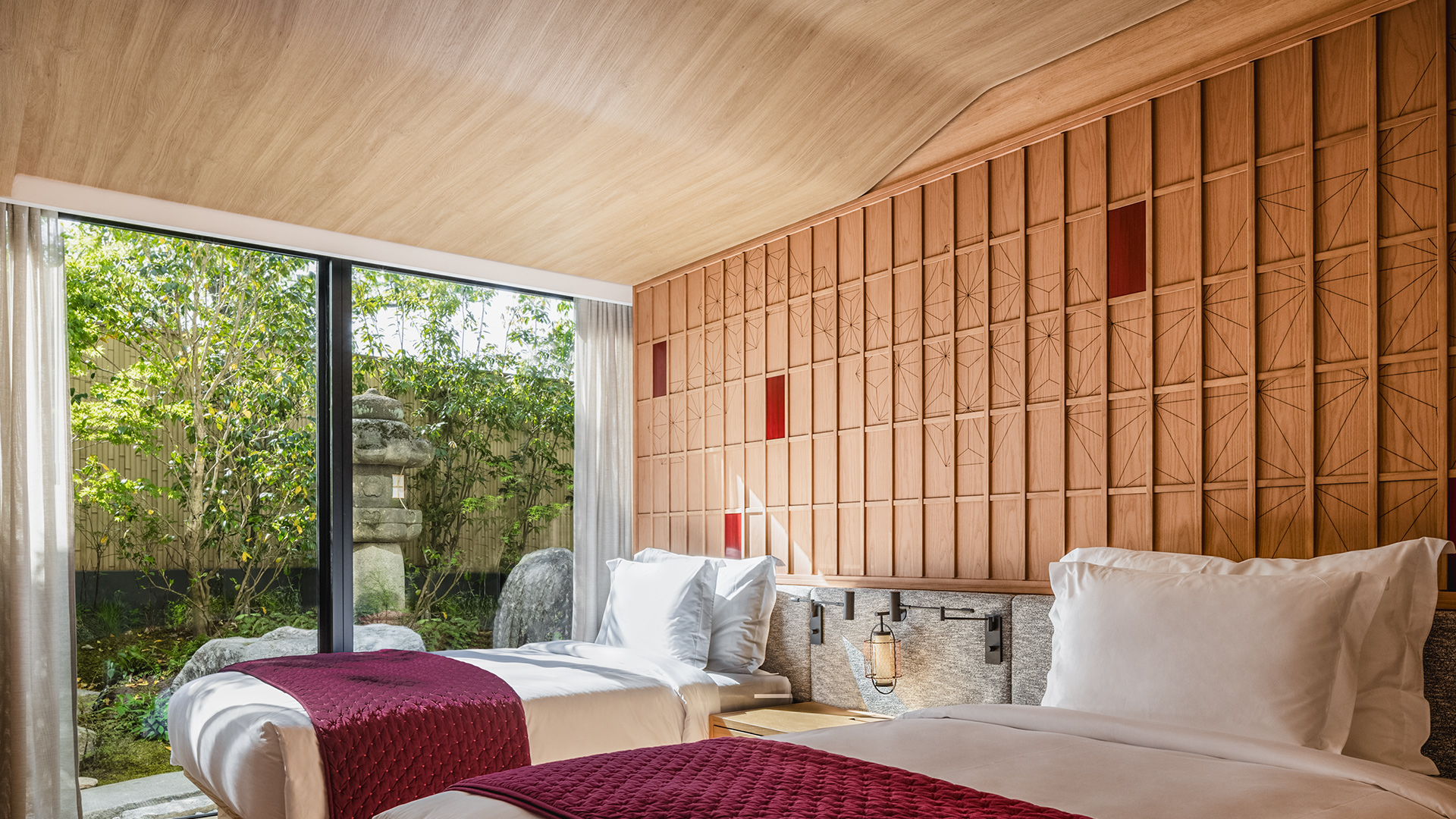
If a room needs instructions, it isn’t luxury.
Making tea in the morning. Getting ready for dinner. Opening a drawer and finding exactly what you need. Sitting down in a restaurant and instinctively knowing you’ve chosen the right seat.
These are small things; but small things, when done with care, become the memory.
What Irks the Guest
If you ask what irritates travellers most, the answer is simple: when things don’t work.
When you don’t know where to put your suitcase. When the lighting feels wrong. When the sink is too small. When there’s nowhere to lay out your belongings.
Luxury today isn’t about adding more, it’s about removing friction.
The best hotel design guides guests intuitively so that everything feels natural: almost as familiar as home, but elevated. When that flow is right, guests don’t notice it, they simply feel at ease.
Ease is powerful, because when a space works seamlessly, the guest can focus on the experience not the inconvenience.
Intuition Before Innovation
There’s a difference between surprise and inconvenience.
A layout can look exciting on plan and fail in practice. The best design ideas are intuitive: like picking up a Dyson hair dryer. It’s beautifully designed, but more importantly, you immediately know how to use it.
The same should apply to a guest room.
When I walk into a hotel, I instinctively feel where things should be. Where the suitcase belongs, where I’ll sit, how the space should unfold; and when something isn’t where I expect it to be, it throws the experience slightly off balance.
Creating that intuitive flow is essential. Guests shouldn’t feel directed and they shouldn’t need instruction. They should instinctively know how the room transitions from day to night because the design guides them quietly.
You can layer moments of “wow” such as an unexpected view or a dramatic arrival, but the foundation must be instinctive. The key is that the surprise still works, it’s not different for the sake of being different. If intuition fails, the ritual fails.
Designing for Ritual
We often underestimate the ritual of waking up and getting ready. A morning routine while travelling can feel compromised: poor lighting, insufficient storage, a dressing table tucked awkwardly into a corner.
But when it’s done properly – with generous surfaces, flattering light, drawers that open smoothly and everything within reach – the rhythm of the day changes.
In one project, we rethought the dressing area entirely. The aim wasn’t spectacle, it was confidence. The guest should feel comfortable spending time there and leave the room feeling like a million dollars, not rushed.
That isn’t a grand gesture, it’s an everyday ritual made better.
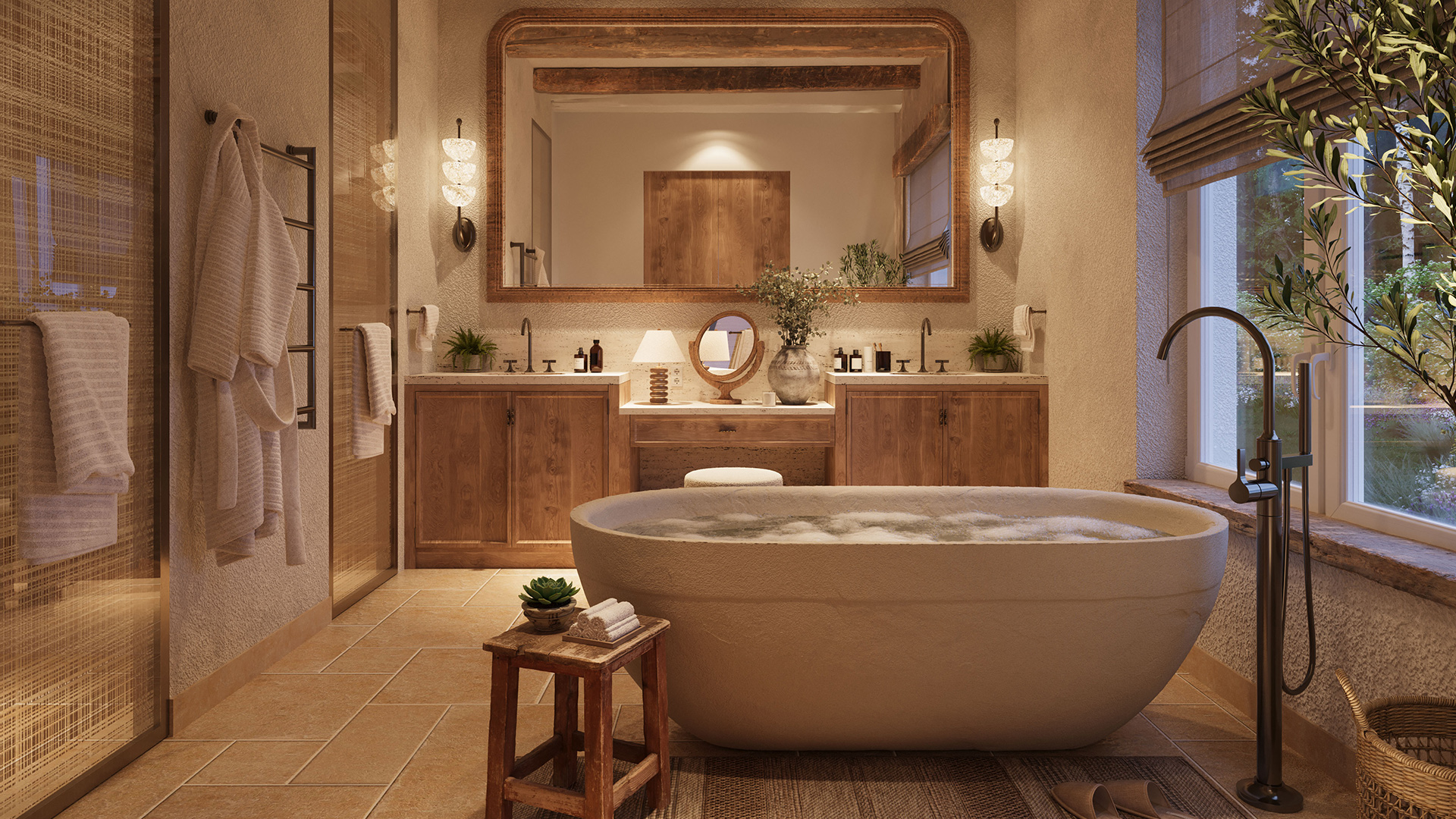
The same thinking applies to bathing. The direction of the tub, the tactility of stone underfoot, the weight of a robe, the clarity of the controls: these details determine whether the moment feels restorative or interrupted.
Luxury here isn’t excess. It’s proportion, comfort and balance.
Ritual as Extension of Place
Ritual isn’t confined to the dressing table or bath. Consider the mini bar. Its location matters: placed near where guests will naturally enjoy it, allowing the room to shift from daytime to evening. A cabinet opens, glassware is revealed, lighting softens. The room invites a pause.
Turn-down service, too, should mean more than slippers at the end of the bed. A small edible gift made in a nearby village for example, accompanied by a note explaining its origin, connects the guest to place.
These gestures may seem simple, but they rarely happen in isolation. Most owners have strong ideas about how they want their hotel to operate. Many are well travelled, experienced, and deeply invested in how their guests will move through the space. We embrace that. The best rituals often emerge from those conversations; shaped by the owner’s vision and refined alongside the operator.
Working with a global brand can be different. Larger operators often have established frameworks, while smaller brands allow more flexibility. In both cases, the goal is the same: to create rituals that feel authentic to the property rather than imposed upon it.
When that alignment works, the result feels effortless.
These gestures extend the story of the destination into the guest’s private routine. They make the experience feel local rather than generic.
The most successful rituals are the ones that travel home: a tea discovered on holiday, a way of arranging a drinks tray, a small habit repeated long after checkout. That’s when hospitality moves beyond the stay.
From Room to Restaurant
Ritual doesn’t stop at the guest room door. It continues in the restaurant.
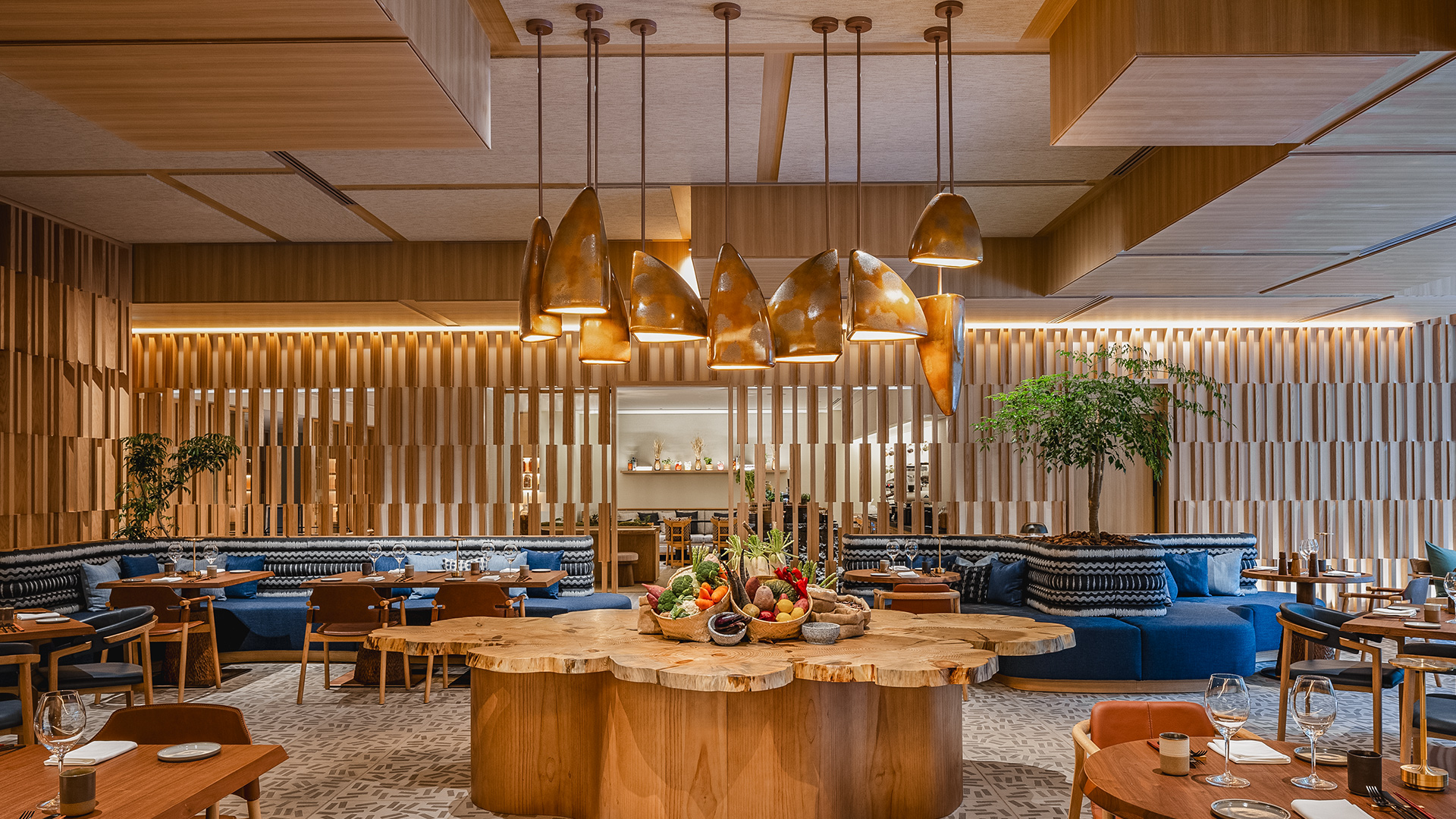
There are seats none of us choose — backs to the room, awkward circulation, blocked views. We design to avoid those entirely. Ideally, every seat should feel intentional. In resorts, we try to avoid more than two rows blocking a view. Guests shouldn’t feel like they are competing for the front.
Where you sit shapes how you remember the meal.
When every seat works, the ritual of dining feels effortless.
Luxury Without Noise
Luxury doesn’t mean layering more colour, more pattern, more statement. It means understanding where the line is: the point beyond which a space becomes overwhelming rather than welcoming.
It is balance and proportion. It is a space that feels natural to use and still manages to surprise you in the right places.
Luxury isn’t the grand gesture; it’s the ordinary moment executed so well that guests want to repeat it. The most memorable hotels are not the ones that shout the loudest. They are the ones that feel right, long after the first stay.